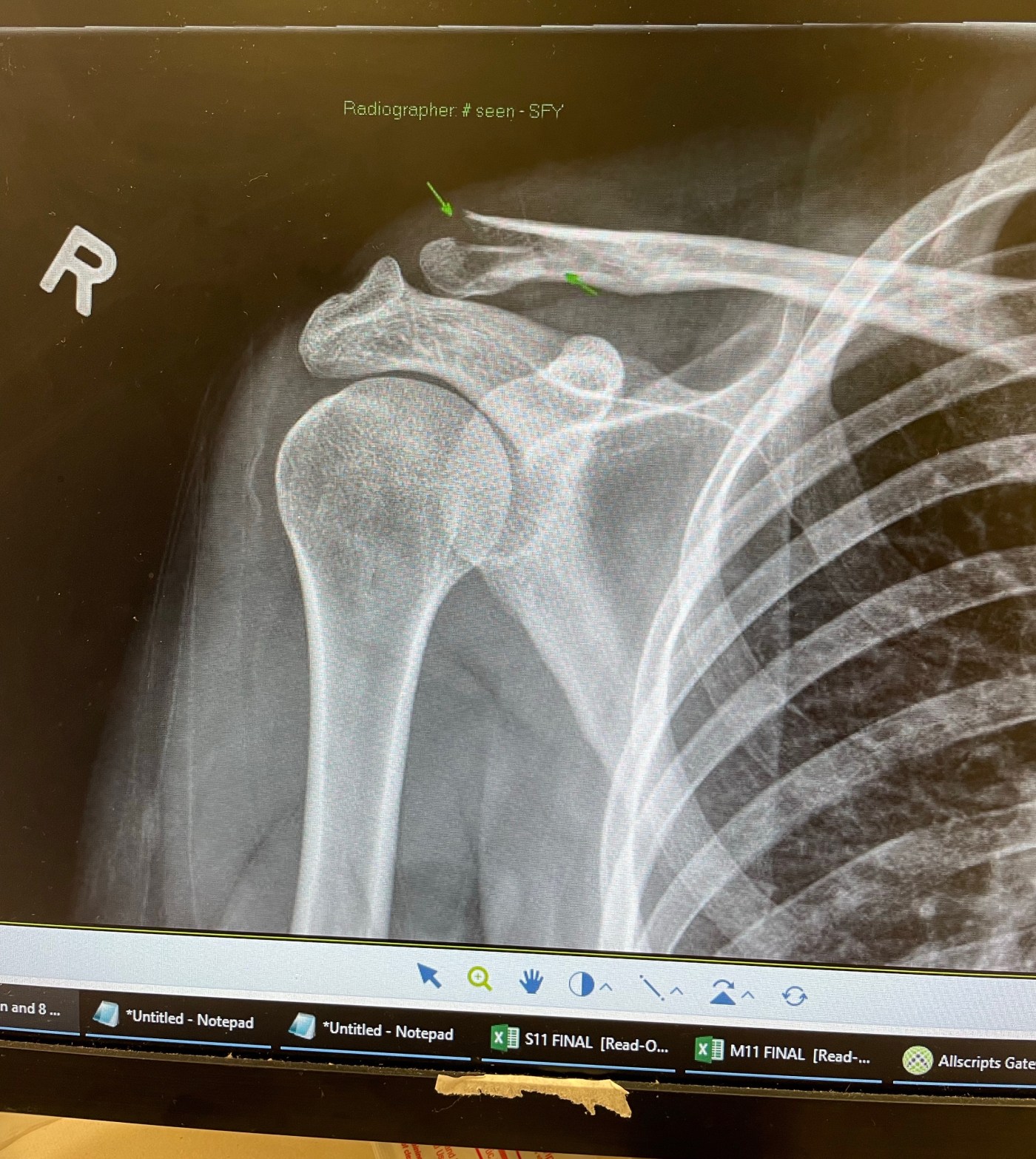
A distal clavicle fracture is a type of fracture that occurs at the end of the collarbone (clavicle), near the shoulder blade (scapula). The collarbone is a long, thin bone that connects the sternum (breastbone) to the shoulder blade. A distal clavicle fracture can be caused by a fall, a direct blow to the shoulder, or a car accident. Symptoms of a distal clavicle fracture may include pain, swelling, and difficulty moving the arm. Treatment options may include rest, ice, physical therapy, and in some cases, surgery.
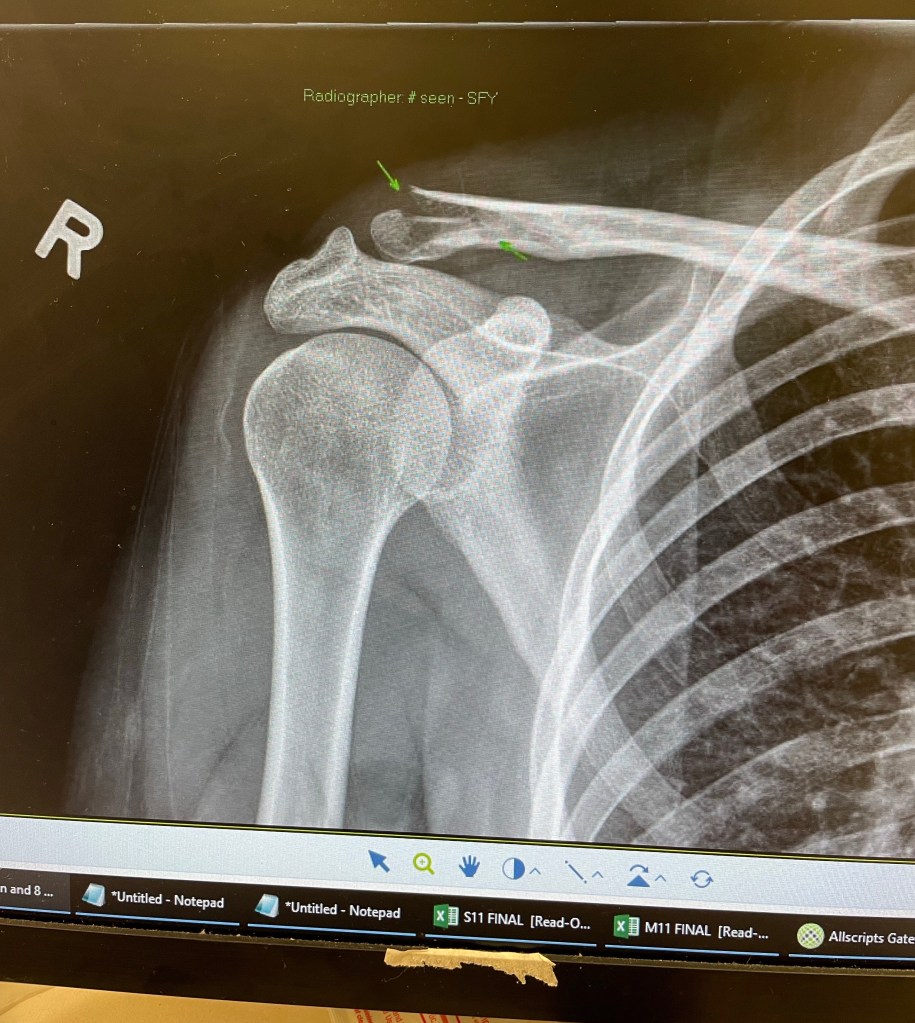
Non-surgical treatment options may be successful in treating a distal clavicle fracture, depending on the severity of the injury and the individual’s age and overall health. Non-surgical treatment options may include rest, ice, physical therapy, and pain medications. If you are considering non-surgical treatment, it’s important to follow your doctor’s recommendations and keep all follow-up appointments to ensure that your injury is healing properly.
So… surgery or not???
The potential pros of surgery for a distal clavicle fracture include:
- Aligning the bone fragments: Surgery can help realign the bone fragments and ensure that they heal in the correct position, which can help prevent long-term problems such as shoulder instability or deformity.
- Faster healing: Surgery may allow the bone to heal faster than non-surgical treatment options, depending on the severity of the injury and the individual’s overall health.
- Improved function: In some cases, surgery can help restore normal function to the shoulder more quickly than non-surgical treatment options.
The potential cons of surgery for a distal clavicle fracture include:
- Risk of complications: As with any surgery, there is a risk of complications such as infection, bleeding, or nerve damage.
- Pain: Surgery can be painful, and pain management may be necessary after the procedure.
- Rehabilitation: Surgery may require a longer period of rehabilitation, during which you will need to follow a specific exercise program to help restore strength and range of motion to your shoulder.
- Cost: Surgery can be expensive, and you may need to pay for some or all of the costs out of pocket if your insurance does not cover it.
It’s important to weigh the potential pros and cons of surgery and discuss them with your doctor before making a decision about whether to have surgery for a distal clavicle fracture. They will be able to give you more information about the specific procedure that would be used in your case and help you make an informed decision about the best course of treatment for you.
And yes.. if you are wondering.. That is my collarbone. 🙊
 Melodie Mike Ng
Leave a comment